 Hi, Kit Morgan here! As some of you know I grew up in a log cabin in the woods. My father, a homicide detective for nearly 30 years, moved us from a big old nifty Dutch colonial in what was then a middle-class neighborhood in the sixties (he bought the house for 13k, now those homes are close to a million bucks) to our cabin thinking that the country life was better for us kiddies.
All in all, it was. My brother, little sis and I were, of course, too young to miss city life. My older  sister wasn’t. She missed her school friends and neighborhood buddies and wasn’t keen on being thrust into the middle of a deep, dark forest. But, like the rest of us, she adapted to our new surroundings and we all have fond childhood memories from our days growing up in such an enchanted place. Not to mention a few … uh … interesting ones. It was the deep dark woods, after all. Things happen in the woods and Christmas was no exception. No witnesses to Santa’s doings for one.
One year my brother heard sleigh bells on Christmas Eve and over the years my little sister and I heard our share of bumps and thumps in the living room after being sent off to bed. As children our first thought was always, it’s Santa! But stern warnings from our mother kept us from creeping into the living room to catch a peek of him.
Then came the year we got brave and went to investigate the odd thumping, bumping and, on  this particular Christmas Eve, colorful language being spit out at odd intervals.
“Daddy?” my little sis was the first to say when she spotted him. Daddy schmaddy ! My eyes were glued to the guy with the Santa hat bent over a HUGE box on the other side of the Christmas tree.
“What are you kids doing up?” our father snapped. “Get back to bed or you’ll get skunked by the fat guy for sure!”
“He doesn’t look fat to me,” I said, eyes still glued to the man in question.
“Me neither,” said my little sis, eyes big as platters now.
Dad, slick guy that he was, came back with, “Oh, yes, well, Santa’s been on a diet, lately. Mrs. Claus had to cut him off the cookies. Gets in the way of his golf game.”
When you’re six with a dad who plays golf, this was a plausible answer. I just wanted to get a look at Santa’s white beard and see if it was real. Never mind the fact that old St. Nick was wearing a brown windbreaker and a pair of black trousers instead of a red and white trimmed suit. At least from what I could see. Maybe he took his traditional suit off and put on his work clothes? I mean, that box was gigantic! In fact, Santa stayed bent over the box, still as a statue. He knew that if he stood and turned around, the jig would be up. He’d be recognized and our belief in the jolly old elf would be blown to smithereens.
You see everyone in town knew and loved Mr. Prokop. He owned the local TV sales and repair shop. Dad had bought our first color TV and Mr. Prokop was delivering it. He was also a neighbor so we were last on his delivery list that night. It’s not easy to hide a present like a console TV, so he took it upon himself to deliver folks’ televisions on Christmas Eve. But this was just the beginning of the story …
Early Christmas morning my little sis and I awoke to an interesting smell. Actually, it was awful. Oh, gads! Had something happened to the marvelous present Santa delivered? We got up and ran into the living room. To our horror, there were broken ornaments everywhere! Not only that, but some large animal (or animals) had, well, had lots of “accidents” on the floor, and not the kind you just spray some cleaner on and mop up. “All the EWS and ACKS woke our parents, big sis, and brother. And of course our rambunctious Great Dane, Muxel, who came happily upon the scene looking as innocent as a dove. But never mind about that, the most important thing was that the giant box was still there and wrapped no less!
“Great Scott, what happened in here?!” our mother cried – that’s the edited version.
Dad saunters in, looks at my sister and me and says, “Oh my, um … looks like Santa let some of his reindeer into the house. See what happens when you let reindeer into the house, girls?” He then tossed a murderous look at the dog.
My little sister and I glanced at each other, horrified once again. Who knew reindeer could do such a thing?
My older sister (nine years older) was less sensitive to our tender beliefs in Santa. “Muxel! You stupid dog!” She got a glare from our father. “Oh, I mean … ew! The reindeer did have an accident!”
 My mother sighed. “Well Carol, if you hadn’t left so many cookies out for Santa and put them in the cookie jar like I told you, then maybe the reindeer wouldn’t have gotten into them, got a sick stomach and messed (edited again) all over the floor.” Glancing at the floor she added, “and knocked half my ornaments off the tree! Who was supposed to block the living room off?”
Silence from my sister. My dad shut up too.
After a moment of this, all of them looked at Muxel. Sans my brother, he was still a believer. To heck with the reindeer having indigestion, breaking ornaments and making messes on the floor. Our eyes had gravitated to the box in the corner. Dad had mentioned he asked Santa from something special for the family. Was I going to be the lucky one to get to unwrap it? Or was I going to have to fight my brother or little sis for the honor?
“All right, Carol, since you left the cookies out,” my mom said, “you get to help clean up the mess.”
“What? Me! Why me?”
“Stop arguing and help your mother,” our father said. “Besides, it could be a lot worse.”
Carol stared at the disaster. “How?”
“You could have left my slice of leftover carrot cake out. Just think what that would have done to the reindeer!”
This drew my younger sister’s and my attention again. Reindeer probably would have loved carrot cake. And we couldn’t deny the living room did resemble a mini war zone. But reindeer weren’t small. In our young minds, we could see how half the ornaments could be knocked off the tree as they gobbled cookies. Which, in turn, would result in any number of catastrophes, depending on how sensitive a reindeer’s stomach was.
There was a debate between my little sis and me later as to whether the reindeer hit the tree before, during or after they ate  the cookies, but when you’re five and six, debates end quickly. Soon the messes were cleaned up, the glass shards swept away, (preventing future hazards) and Christmas began. And the TV? It was the best Christmas present ever! It didn’t matter that it was for the whole family. We now had a color television! Back in the sixties that was a big deal. It even overshadowed the fact that Reindeer had desecrated our living room the night before!
Years later we learned the truth of the story. We still have a polaroid photo dad took of Mr. Prokop that night. Muxel our Great Dane was never allowed to eat cookies again, (or get near another Christmas tree) and our new color TV lasted for many, many years. My little sis and I own the log cabin in the woods now, and my current television was purchased from, guess who? Santa! Who in his eighties still owns the TV and repair shop in town, and is still our neighbor up the road.
Do you have a funny Christmas or holiday story? Do share! I’ll pick one lucky winner from the comments to receive an e-copy of my newest book (releasing next weekend) Holidays with the Weavers! I’ll announce the winner on Thursday so be checking back!
To check out my other books you can find them on my Amazon page.
We have a winner!
Colleen,
You’ve won a free E-book copy of Holidays with the Weavers!
Email me at authorkitmorgan@gmail.com and I’ll get your book to you! Congratulations!

 Philip Foster Farm in Eagle Creek, Oregon was the last stop along the Oregon Trail for weary travelers to rest before continuing on to Oregon City. This year the farm is opening The Lucy House, which Philip Foster built for his daughter.
 course added a bathroom and laundry room. These were removed to bring back the house’s historical authenticity. I had fun visiting the Lucy house this weekend and seeing what had been done with the place. Of course, it’s fun visiting the farm anyway!


 If you’ve never been to a book conference you don’t know what you’re missing! Hi, Kit Morgan here and I recently I attended Book Lover’s Con 2019 in New Orleans. It was a lot of fun with wonderful events and books galore! So I thought I’d share with you some of the highlights. There was a Faery dinner, various fun events for readers, workshops for authors, a huge book signing with over 200 authors, dance parties and more! And hey, it’s New Orleans, so naturally, folks ventured out and did a swamp tour, plantation tour, or simply explored the French Quarter. There’s nothing like staying in a historic city to get the creative mind going!

 World in 80 minutes, or attend fun classes like Bookmarks, Bracelets and Beads. Take a Bite Out of Inspirational Fiction was a fun little signing hosted by authors Susan May Warren, Liz Johnson, Julie Klassen Elizabeth Goddard and more. The Historical Book Club was another fun event I was part of where we all dressed up in period costume. There was the Small Town Reader Carnival hosted by authors such as Rae Ann Thayne, Emily March, Sheila Roberts, and Melinda Curtiss.


 from place to place on the same line.


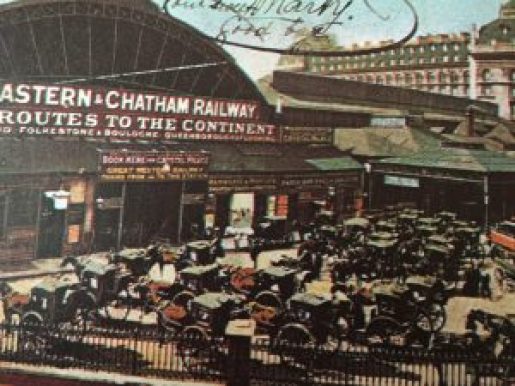
 carried into the west. Every city and town and communities formed by settlers out west had their collection of horsey characters who congregated at dealer’s yards, auction rooms, country fairs, particular inns and other places where the talk always came straight from the horse’s mouth and everyone had some knowledge of a better bargain to be had. Most horse dealers were reputable men, but some were copers who practiced every trick of their dishonest trade to deceive the ignorant and the gullible amongst whom clergymen and old ladies were often in supply. A frisky lively horse, which might become a runaway, was given what copers called the “ginger” — a sound thrashing for a few minutes to make it appear quiet and manageable — right before it was displayed to the intended victim along with soft and soothing words.
 Kit Morgan here and today I want to talk about farm life in the Dakota territory. (Okay, and a little about modern-day Oregon.)
 or trade. Their work might have yielded only a small portion of the income derived from their farm, but it was steady and substantial enough to meet the basic needs of their family no matter the conditions of the crops or the state of nearby agricultural markets. We had it going on back then and knew how to bring home the bacon! Or in this case the chickens and the milk. Productive American farm women enjoyed the respect of their families and communities even though they didn’t gain additional political or economic rights as a result of their work.
 If they managed to remain on their farm through the first few years they might even build a barn! Maybe they’d add onto their house, acquire more land or better equipment. But none of this did you much good if you were too far away from markets and trade centers. This was a problem for the earliest settlers. Later settlers didn’t have it so bad as by then towns had cropped up. Later still there were grain elevators and railroads. Whew! What a life they had!
 laundry to get by. Life was hard even with the support of a family in those days. A woman alone had a much harder time of it. We’ve all heard stories from our parents, grandparents or great grandparents of tough times back in the day. For a free copy of Claire (which will release on March 1) do you recall a story that a loved one has shared with you about the things women did to make ends meet and keep their family fed? I’ll pick a random winner from the comments.
 Hi, Kit Morgan here and as I’m at my daughter’s in New York, I was in a bit of a quandary as to what to write about. But then I remembered I have a few books here and thought I’d share with you some lovely fashion plates from one of them. After all, there’s always fashion going’s on around here. My daughter is a fashion photographer and music video director. Since my arrival, she’s shot for a major cosmetics company and done several fashion shoots as well. She even did a puppy shoot for a friend, then toddled off to San Francisco to shoot a music video. Currently, she’s in Scotland. Ah the life! At any rate, I have a book I bought at Strand’s Book Store in Manhattan last year with some lovely photos in it. My how fashion changes over the years. A lot of my stories take place on the Oregon prairie or the orchard covered rolling hills of what is now apple country in Washington state. My characters are dressed in simple attire, calico prairie dresses and aprons with simple white bonnets. But these, well, maybe I’ll write some stories in a different setting just so I can dress my characters in some of the fancier dresses of the day! Oh, by the way, that’s Rowena, the long-haired chihuahua in the above picture. Cute isn’t she? If she lived back in the 1800s, what would her owner be wearing? Well, it would depend on the decade …


