Chuck Wagon Cook vs. Wagon Train Cook: Two Kitchens on Wheels

Hello, Lynne Lanning here.

When we picture the American West of the late 1800s, two iconic images come to mind — the dusty cattle drive and the hopeful wagon train. Both depended on a cook to keep body and soul together across hundreds of miles of unforgiving terrain. But while these two cooks shared a canvas kitchen and an iron skillet, their worlds were surprisingly different.

The Chuck Wagon Cook: King of the Cattle Drive

On a cattle drive, the cook was royalty. Second in authority only to the trail boss, and he demanded respect. Feeding ten to twenty cowboys three times every day, for months on end, he was scheduler, medic, barber, and camp manager all rolled into one weathered, flour-dusted package.

His chuck wagon was his kingdom. The chuck box held everything from sourdough starter to liniment. Nobody touched it without permission. He rode ahead of the herd each day to select a campsite, set up, and have a hot meal waiting when the cowboys arrived, dusty, tired, and hungry enough to eat the wagon wheels.

His menu was simple but essential: beans, biscuits, salt pork, dried fruit, and coffee so strong it could lasso a steer on its own. Cowboys who complained about the food quickly learned that a hungry trail was far worse than a humble one. The cook’s word around camp was law, and even the trail boss thought twice before crossing him.

His sourdough starter was often his most prized possession, kept warm against his body on cold nights to keep it alive. Losing it wasn’t just an inconvenience. It was a tragedy.

Speaking of tragedy… A cattle drive was full of dangers, ranging from harsh and sudden weather conditions, wild animals, rustlers, and of course, the dreaded stampede! Join a cattle drive adventure with my book – The Miracle of Peace – Dangers ahead!

Mail Order Stonemason –  is a perfect picture of the range wars and how the homesteaders braced themselves against an intentional stampede, meant to wipe out their houses and even their lives!

But let me get back to the cooks! The cantankerous cook in Caleb’s Brides –  was seriously injured, but that didn’t stop him from being cantankerous! This is a fun, lighthearted read!

The Wagon Train Cook: Servant of the Family

The wagon train cook operated in an entirely different world. Instead of cowboys, he… or very often, she, cooked for families. Westward pioneers brought their own supplies, recipes, and opinions, making the cook’s job considerably more complicated.

Not all wagon trains hired a cook. Sometimes, families prepared their own meals, around individual fires at the end of each day. When a cook was employed, the role carried far less authority than its cattle drive counterpart.

The wagon train cook had to stretch supplies over journeys that could last four to six months, using whatever game, water, or trading posts the trail provided. Cooking was done over open fires or small camp stoves, often in wind, rain, or suffocating dust. With the needs of an entire community to consider, flexibility and patience were as important as any recipe.

The menu looked similar: beans, cornmeal, dried meat, biscuits; but the spirit was different. This was for comfort, with a taste of home dragged across the prairie in a wooden wagon.

Join the 4 to 6 month trek across the country, as A Journey for Keelie gives descriptive details of the blessings and dangers along the way –  (This is one of my all-time best sellers!)

Back to the cooks!

What They Shared

Although different, both cooks kept people fed, healthy, and hopeful in some of the harshest conditions imaginable. Both worked before sunrise and long after sunset, improvising, knowing that a hot meal at the end of a brutal day was worth more than almost anything else on the trail. They knew food wasn’t just fuel, it was what held people together when everything else threatened to tear them apart.

The Bottom Line

The chuck wagon cook was an authority figure, ruling with an iron skillet and an iron will. The wagon train cook was a nurturer, feeding families and the fragile hope of building a better life.

Two cooks. Two kitchens on wheels. One unforgettable era in American history.

It’s an honor to share a glimpse of my passion for the Old West! For this special occasion of being here with you, all 4 ebooks mentioned above are on SALE for 99c each this weekend.

Today, there will be three winners to celebrate my sweet, new book releasing May 15th – Garden Belles – Quince (on pre-order!) Winners will receive ecopies of my 2 published books in the Garden Belles series – Violet and Jasmine. What a sweet series it is! Prepare to fall in love!

Tell me about your experiences of cooking or eating outside. Campfire? Backyard grilling? What is your favorite campfire food?

If you were going to work as a cook on the trail, which would you choose: cattle drive or wagon train? Why?

Biscuits, Beans, and Bacon – What Cowboys Actually Ate


I’ve spent the better part of the week pouring over research for a new book. And as usual, I find myself going down the rabbit hole…AGAIN!

While looking for authentic Civil War recipes, I happened upon cowboy cuisine, and as much as I love, love, love cowboys, I don’t think I could handle a steady diet of biscuits, beans, and bacon.

The romantic image of cowboys feasting on juicy steaks by a roaring campfire differs from the gritty realities of life on the trail. Beyond the cattle drives, roping skills, and dusty landscapes, lay the daily struggle for survival, and a critical element of that survival, was of course food. What did these men, often far from civilization for months at a time, actually eat?

Beans were the undisputed backbone of trail cuisine for cowboys, favored for their durability and nutrition. Whether pinto or navy, these legumes provided a vital source of protein and fiber, keeping hunger at bay during long rides. Much like today’s camping meals, beans were easy to store, transport, and cook in a single pot over the fire.

Salt Pork and Bacon were prized trail foods, valued for their long shelf life and high calorie content. Unlike the bacon we know today, these cuts were heavily salted and cured, making them tough but ideal for travel. Preserving meat with salt or smoke was essential to prevent spoilage on the dusty plains.


Coffee, often called the cowboy elixir, was more than a beverage…it was a daily ritual and morale booster for weary cowboys. Brewed strong and black, coffee provided much-needed energy for long, grueling days. Without fancy equipment, cowboys simply boiled grounds over the campfire, sometimes letting the grounds settle or straining them through a bandana. Often, they used the same pot day after day, thus contributing to the unique flavor of cowboy coffee. (Note: I enjoy a cup of coffee first thing in the a.m. but require my hazelnut creamer or during the holidays, pumpkin pie spice!!!)

When real coffee ran out, they turned to resourceful substitutes like roasted chicory or dandelion roots. These stand-ins provide a warm bitter brew that mimicked coffee’s comfort, if not its flavor or strength.

Dried Fruit, like raisins, apples, or peaches, served as portable treats for the hard-working cowboys. They provided a rare sweetness and vitamins on the trail, breaking up the monotony of the constant savory dishes.

Canned Goods were a rare luxury on the trail, thanks to advancement in food preservation. Occasionally, cowboys enjoyed treated liked canned peaches or tomatoes. However, these items were heavy and expensive, so they appeared only when supply wagons had extra storage space. Still, even a single can could lift spirits and remind cowboys of comforts far from home.

Fresh Game supplemented the cowboys’ diet, its success dependent upon sharp shooting and the abundance of wildlife along the trail. Compared to salted pork or hardtack, rabbits, prairie chickens, or wild birds offered richer flavor and variety to their diet.

Sourdough Bread starters were a trail cook’s secret weapon for baking fresh bread or biscuits on the open range. Kept alive with regular feedings, these starters allowed cooks to whip up hearty, tangy loaves and fluffy biscuits right over the campfire.

Jerky–dried, salted strips of beef or buffalo–was a trail for its portability and long shelf life. ? Packed with protein, it could be eaten on the go, making it perfect for busy days in the saddle, providing energy when time or conditions make cooking impossible.

Molasses and Sugar were precious commodities on the trail, reserved for sweetening beans or biscuits on special occasions. Even a small spoonful transformed otherwise bland food, making them a special treat for cowboys craving a taste of sweetness.

Rice and Cornmeal added much-needed variety to the cowboy diet, often cooked into hearty porridges, grits, or mush. These staples reflected the influence of Southern and Mexican cooking. Cornbread, in particular, was a favorite, easily baked over coals, while rice provided a filling base, helping stretch meager rations even further.

Onions and Potatoes were tossed into stews, beans, or skillet meals, adding vital nutrition and ample flavor to otherwise plain dishes. These hardy vegetables could survive for weeks without spoiling, making them a practical addition to the chuck wagon’s limited pantry.

Dried Chili Peppers and Spices were essential for livening up bland trail food. Mexican vaqueros, in particular, brought the tradition of adding heat and flavor with chilis and seasonings–particularly in the colder weather–transforming meat or beans into a satisfying meal and adding a taste of home to the trail.


The real diet of cowboys was shaped by necessity, resourcefulness, and sheer grit. From beans and biscuits to foraged greens and rare treats like canned fruit, these simple, rugged meals fueled long days in the saddle and left a lasting imprint on American folklore. Their adaptability in the face of hardship is as legendary as their cattle drives.

Next time you enjoy a campfire meal, remember the inventive spirt of the Old West–and try adding a cowboy twist to your own menu!

***********************************

Coming next month…

Your journey doesn’t have to end in disappointment.”

Lila Hartley had waited for hours on the frozen train platform, a mail-order bride no one came to claim, her trunk beside her like a tombstone. The man who’d promised her marriage, a home, and a future, left her stranded two thousand miles from Boston with nothing but the clothes on her back and a heart full of shattered dreams.

Just when hope was fading, a man emerged from the white curtain of snow like an apparition, took off his coat, and changed her life.

Clay McCallister viewed every woman who had taken a chance on the frontier as the sister he’d failed…a woman who’d risked everything for the possibility of something better, much like the woman standing on the platform in the bitter cold.

Sometimes warmth doesn’t always come from fire — sometimes it comes from the heart.

Pre-Order Link


Cowboy Slang Fun and Giveaway


It’s been a while since I’ve played a game here and had a giveaway, so I thought I’d do both today. And what better topic than one of my favorites:  cowboy lingo. But this time, there’s a twist. All the lingo refers to food.

So, the rules are pretty simple. This is a matching game. Match the numbered word in the left column with the letter definition in the right column. Put your answers in the comments, and I’ll randomly draw a winner from all those who answered correctly.


An example answer might be:  1b, 2d, 3a, etc. (note, these are NOT correct guesses).

So, come on. Let’s have some fun. The winner will receive my Cowboys and Coffee giveaway which includes a cowboy coffee mug, $5 Starbucks gift card, author bling, and two of my backlist books featuring a guaranteed to swoon over cowboy hero ? (U.S. shipping only, please)

Well, I don’t know about you, but I’m in the mood for something to eat!

Bar D Chuckwagon

Back in June, my husband and I celebrated our 30th wedding anniversary. To commemorate this milestone, my hubby planned a great trip for us to visit Durango, CO. Knowing how much I love the history of the west, we visited several museums, rode a steam train to Silverton, and even stayed one night in an 1800’s hotel.

One of the highlights of the trip for me happened at the very beginning of our trip. We spent an evening at the Bar D Ranch for their Chuckwagon Supper and Old West Cowboy Music Show. It was FANTASTIC!

The Bar D is more than just a ranch. It’s a western village complete with chapel, blacksmith shop, mercantile, chocolate shop, art gallery, and even a train depot. We made sure to get there early to have lots of time to explore.

This adorable little chapel is rented out for weddings. It contains lovely stained glass, and on the night we visited, a couple of cowboys were using for a cowboy poetry reading. The well was right outside the chapel, and since I’m currently working on a westernized Snow White tale, I couldn’t resist a photo by the wishing well.

They also had a large smithy where a local blacksmith was busy plying his trade.

We took advantage of photo ops by the covered wagon and cowboy cut out as well.

I bought a few souvenirs, perused the art gallery, and we even dared spoil our dinner with a sweet appetizer from the chocolate shop. So good!

Then it was time for dinner and a show.

This gorgeous mural was on display as we lined up for our grub. In true cowboy fashion, they served us on tin plates and filled our water/tea/lemonade cups with giant galvanized coffee pots. All the shops close down winner starts, and the staff become our servers. Even the cowboy performers we’d soon see on stage. Everyone wore period western costumes to add to the experience. The costumes were more 1950’s TV western than actual 1800’s western, but I didn’t care. It was too much fun!

The food was delicious! You could choose chicken, roast beef, combo plate, or pay extra for a rib eye steak. Several of the people at our table ordered the rib eye, and it looked amazing. I had chicken and loved it. Wes went for the combo plate. We both ate every bite. Meat, baked potato, biscuits, homemade applesauce, and a slice of spice cake.

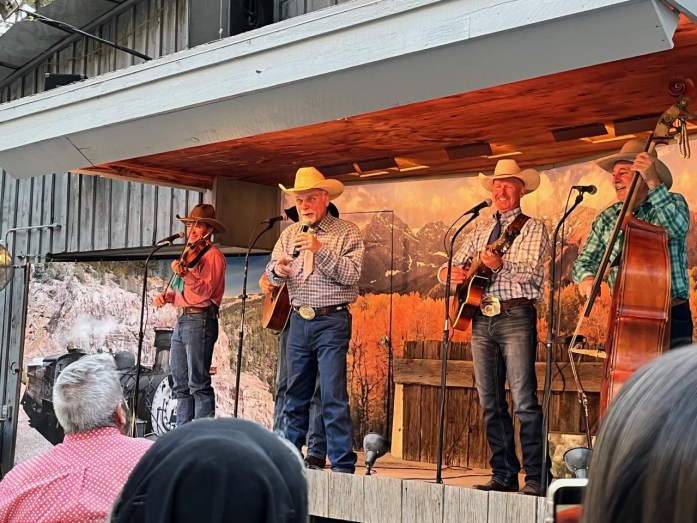
As we finished eating, the Bar D Wranglers made their way onto the stage. This was the true highlight of the evening. Fiddle, string bass, and two guitars with four-part cowboy harmony. Everything from Tumbling Tumbleweeds to The Devil Went Down to Georgia. We even had an instrumental version of the 1812 Overture highlighting Gary Cook, one of the Wranglers who is a 2-time National Flat Pick Champion on the guitar. So impressive!

There was comedy too. One of the songs they did was Old MacDonald’s Dysfunctional Farm. It included a lisping snake, an asthmatic cow, and a foul-mouthed chicken just to name a few. We were all in stitches.

A fifth wrangler joined the show for about four or five songs. He was a yodeling cowboy who held us all spellbound. Wow! He flipped between registers with the agility of a a concert pianist. So fast and so clear. I loved it!

What a great way to kick off our vacation! We were grinning the entire night.

If you were going to eat a chuckwagon dinner, what is the one cowboy dish that would be a must to include?

Don’t forget about the P&P Birthday Party on Thursday. It’s going to be so much fun with some great prizes!